Statement of corporate social responsibility
See section 99a of the Danish Financial Statements Act
The statutory report on corporate responsibility (CR) includes a description of the business model of JPS Marselis ApS in relation to corporate responsibility, corporate responsibility policies and risk assessment, as well as a description of actions and results.
JPS Marselis ApS has elected to publish its statement in accordance with Section 99a as indicated on the company website.
The following statement comprises JPS Marselis ApS’ reporting for 2024/25 and is part of the management’s review as presented in the annual report.
Description of the JPS Marselis business model
JPS Marselis is structured as a holding company with subsidiaries focusing on Danish properties (JPS Ejendomme A/S, JPS Dania A/S, JPS AROS A/S and JPS Germa A/S) and the companies Tropica Aquarium Plants A/S (activities in Denmark, Germany and Canada), Hornbaek A/S (activities in Denmark and Latvia), Vahle A/S (activities in Denmark), Grønning Hård Træ A/S (activities in Denmark), JPS Hotel Service A/S (activities in Denmark) and Dansk Administrationscenter A/S (activities in Denmark). In addition, the subsidiary JPS AGRO A/S focuses on investments in Danish agriculture and forestry. A number of these companies are set up as focused sub-groups that have their own subsidiaries. The individual companies have a large degree of independence operationally, with their own organisational structures and management with responsibility for running their company. The companies’ underlying subsidiaries manage activities identical to, or closely related to, the company’s main business activity. The companies’ underlying subsidiaries manage activities identical to, or closely related to, the company’s main business activity.
The majority of the Group’s turnover is generated from the Group’s own production of wooden goods and aquatic plants. The remaining revenue comes mainly from trading activities and the letting of real estate.
The Group’s procurement of raw materials is limited to timber from forests primarily in the Nordic and Baltic countries, which is purchased in large quantities from approved suppliers. The Group’s procurement of components involves the purchase of a large number of products from suppliers around the world. Common to all of these products is the fact that they are manufactured by suppliers with high quality standards.
In essence, the Group’s turnover is based on sales to professionals who sell the goods on to both private individuals and professional clients. Direct revenue/sales to private and public customers are limited. The Group’s property is mainly let to private tenants (for residential purposes).
The above characteristics mean that the Group’s general business model involves CR- related conditions that play a central role in our business. This applies especially to employee relations, our use of resources in the form of energy and raw materials etc. as well as good business ethics.
CR – policy and risk assessment
JPS Marselis has adopted corporate social responsibility policies in the areas of:
- Human rights
- Social conditions and employee working conditions
- Anti-corruption measures and business ethics
- Environment and climate
The policies are implemented within the Group.
The Group’s CR policy provides a framework for a common approach to be taken by all our employees in relation to our values and our targets, i.e. to be sustainable and responsible in our actions. The policy outlines a series of guidelines and our expectations of one another, summarising how we should conduct ourselves as employees and as an employer. The policy is based on the United Nations’ ‘Global Compact’.
JPS Marselis has also conducted an overall risk assessment of the areas mentioned above. The most significant risks are outlined below in connection with the policy in each individual area.
Human rights
JPS Marselis is active in a large number of countries around the world. Regardless of where we have our operations, we always strive to observe human rights, value our employees and treat them with respect. We support and respect the protection of internationally proclaimed human rights as set out in the UN Declaration of Human Rights and in the ILO conventions and recommendations.
JPS Marselis has conducted an overall risk assessment with regard to human rights. The Group operates in different countries. However, no specific risks in relation to human rights are considered to be associated with these countries.
The management of all activities is familiar with our policies and positions on human rights – regardless of geographical affiliation. The latter is considered a fully adequate measure to counteract the risk of human rights violations. There were no human rights violations during the year. With the measures described, there is not expected to be a particular risk in the future.
Social conditions and employee working conditions
At JPS Marselis, we believe that it is the people who achieve the results. We strive to be a responsible employer that ensures proper terms of employment, safe and healthy working conditions and a motivating working environment for our employees. We are a diverse workplace that contributes to the communities in which we have a presence by creating jobs and employing unskilled workers and people struggling to break into the job market.
JPS Marselis has conducted an overall risk assessment with regard to social conditions and employee working conditions. As JPS Marselis considers its employees to be the Group’s most important resource, CR risks related to social and employee matters are considered to be an area of particular importance.
The activities undertaken by the Group require employees to be dedicated and highly competent, with significant demands placed on their skills. For the most part, the company has an educated labour force or employees who have acquired the necessary skills after an induction and further training, making it possible to meet the company quality and safety standards. This helps to ensure that a high level of health and safety can be maintained.
With regard specifically to social conditions and employee working conditions, activities taking place outside of the former ‘Western Europe’ (Latvia) are thought to be particular risks, because management culture and motivating working environments do not have the same prevalence and historic integrity as we know it in Denmark. For this reason, we place a particular focus on these areas in our day-to-day management and controlling of the subsidiaries. The outcome of this specific focus is thought to reduce the outlined risks. Continual improvements are being made to minimise the risks in this area. There have been no specific cases in 2024/25 in this regard.
In terms of the policies in this area, no non-compliant activities/decisions were confirmed (in this area) for the financial year in question. The actions taken are considered sufficient to address the risks of infringements in this area going forward. Management monitors this area on an ongoing basis and will take the necessary measures to prevent unacceptable incidents if it appears that the activities initiated are not sufficient.
The overview below shows registered occupational injuries in subsidiaries with employees:
|
JPS Marselis subsidiaries with employees |
|||
|
|
2024/25 |
2023/24 |
2022/23 |
|
JPS Clemens A/S |
0 |
0 |
0 |
|
Tropica Aquarium Plants A/S |
0 |
0 |
0 |
|
Dennerle Plants GmbH |
2 |
0 |
1 |
|
Tropica North America Ltd |
0 |
0 |
0 |
|
Carmen Damer GmbH |
1 |
4 |
0 |
|
JPS Aquatic (UK) Ltd |
0 |
NR |
NR |
|
Hornbaek A/S |
4 |
4 |
3 |
|
Hornbaek Baltic, Latvia |
4 |
3 |
1 |
|
Vahle A/S |
3 |
1 |
3 |
|
Grønning Hårdt Træ A/S |
0 |
NR |
NR |
|
JPS Aros A/S |
0 |
0 |
0 |
|
JPS Ejendomme A/S |
0 |
0 |
0 |
|
JPS Germa A/S |
0 |
0 |
0 |
|
Dansk Administrationscenter A/S |
1 |
0 |
1 |
Anti-corruption measures and business ethics
Over the years, JPS Marselis has built up a reputation as a company that maintains a high level of integrity and ethical conduct. We counteract all forms of corruption, including bribery.
JPS Marselis has conducted an overall risk assessment with regard to anti-corruption measures and business ethics. The JPS Marselis vision is to be one of the best at creating value in a proper and credible manner, done by committing ourselves and our companies to assuming responsibility and acting in the interest of sustainability, regardless of the country of our business operations. This vision is firmly anchored in the manner in which JPS Marselis runs its business, which has helped to build up the Group’s good reputation. As such, it is not thought that this area poses a major risk for CR; even so, a firm focus is placed on it to ensure that a high standard is maintained.
With regard specifically to anti-corruption measures and business ethics, activities taking place outside of the former ‘Western Europe’ (Latvia) are thought to be particular risks. To provide some background, the business environment there typically is, or has been, susceptible to bribery and corruption, as these are considered important ingredients historically when it comes to meeting business targets. For this reason, we place a particular focus on these areas in our day-to-day management and controlling of the subsidiaries. The outcome of this specific focus is thought to reduce the outlined risks.
In relation to the policies described in this area, no unacceptable actions/decisions have been identified in this area during the financial year.
The Group has introduced a whistleblower scheme that complies with general practice for sound company management. Under the whistleblower scheme, employees, customers, suppliers, partners or other stakeholders with a connection to JPS Marselis Group are able, in good faith, to report (anonymously or publicly) any serious circumstances potentially of significance to the company as a whole, or which may have significant meaning for the lives or health of individuals. The whistleblower scheme is available on jpsmarselis.dk in four language versions: Danish, English, German and Latvian. No reports were made via the scheme in 2024/25.
The activities initiated in this area are expected to be sufficient to counteract risks in this area. Management will follow up on an ongoing basis and make corrections if necessary.
Climate and environment
JPS Marselis Group companies use raw materials in their work that are predominantly produced in a way that is positive for the environment. This applies both to the primary raw material, wood, which comes from forests in northern Europe, and to purchased plants. We recognise that transportation of raw materials, plus the production/processing that takes place subsequently, has an impact on the environment. Our CR policy for climate and environment requires us to take responsibility in relation to the environment and impact on the climate, doing so via proactive efforts to protect the environment, which includes reducing our consumption.
JPS Marselis has conducted an overall risk assessment with regard to climate and environment. As a result of continually reducing consumption of resources as a consequence of a desire for environmental responsibility and sound business practice, this area is not thought to pose a CR risk for the Group. When purchasing raw materials, certification tends to be a central requirement (e.g. FSC®), which means that we are ensuring that the raw materials fulfil a number of CR requirements.
In March 2023, JPS Marselis became part of the UN Global Compact. This is official confirmation of the Group’s dedication to complying with internationally agreed principles for responsible business management and making a contribution to the global community meeting the UN’s global targets. In addition to the group, Tropica, Hornbaek and Vahle have also become part of the UN Global Compact, as it makes good sense to include the individual production companies, given that they already focus on sustainable production. Being part of the UN Global Compact provides a unique opportunity to gain experience from other companies’ experiences and gain inspiration on how we can become even better and where we need to focus our efforts.
In terms of the policies in this area, no non-compliant activities/decisions were confirmed (in this area) for the financial year in question. In relation to the policies described in this area, no unacceptable actions/decisions in this area were recorded during the financial year.
Description of action taken and outcomes
CR initiatives at the JPS Marselis Group are undertaken primarily at individual company level, with these ongoing efforts prioritised based on the areas with the greatest CR risk. This often links with the points of focus which are also business-related in perspective, i.e. social conditions and employee working conditions, as well as climate and environment.
2024/25 is the eighth year for reporting on social responsibility (Section 99a).
Below is a brief status of the individual business areas.
Based on the course in lean and sustainable production, which all employees at Hornbaek, Tropica and Vahle as well as foreign subsidiaries have completed, all employees in 2024/25 have played an active role in the companies’ daily work to raise lean and sustainability to new levels. In addition, employees have refreshed their knowledge of lean and sustainability in short courses, and the companies’ board chairpersons have been trained in conducting board meetings.
Our employees regularly conduct courses aimed at taking on new areas of work, upskilling and personal development.
Instead of investing in new computers for the companies, the group continues to purchase refurbished second-hand computers for the job functions where it makes sense. The computers are so well refurbished that employees cannot see or feel that they are used.
The Group’s CR policy provides a framework for a common approach to be taken by all our employees in relation to our values and our targets, i.e. to be sustainable and responsible in our actions. The policy outlines a series of guidelines and our expectations of one another, summarising how we should conduct ourselves as employees and as an employer. The policy is based on the UN Global Compact, and to strengthen the work within the four selected areas, JPS Marselis and its subsidiaries Tropica, Hornbaek and Vahle have joined the UN Global Compact.
Hornbaek Denmark and Hornbaek Baltic
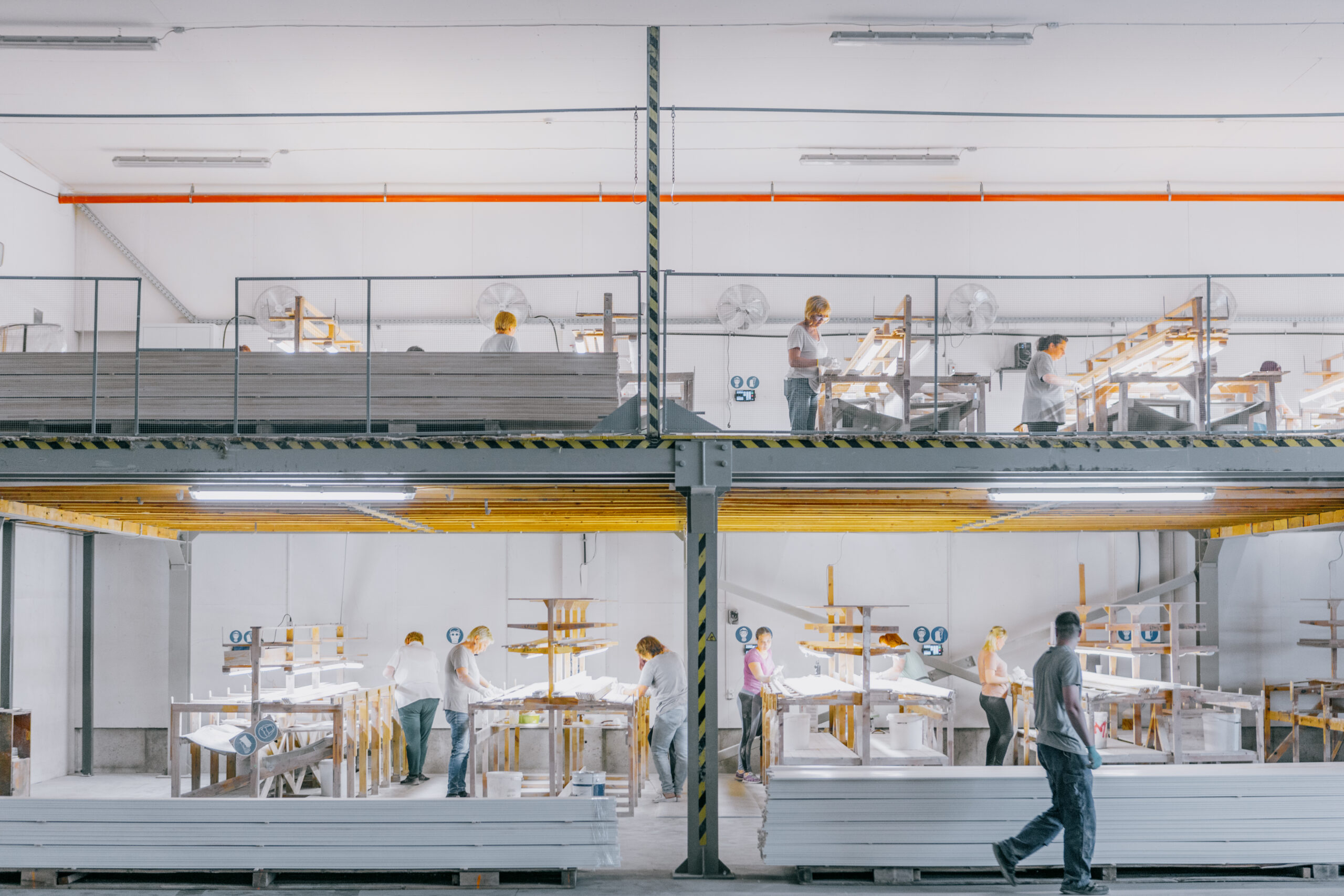
The following specific activities were conducted in Hornbaek in 2024/25:
By investing in Document Capture, the company has saved a significant amount of paper and work processes, thereby saving time.
A new dispatch warehouse has been established, increasing dispatch capacity. This has improved internal logistics, as more goods can be moved directly from production to the warehouse. This has reduced the need for packaging warehouse packages for intermediate storage. This results in a reduction in the consumption of plastic packaging, minimised returns and internal transport. Reducing internal transport means less electricity consumption for trucks.
Hornbaek participated in the ‘Klimaklart’ network in 2024 together with thirteen other companies to exchange ideas and learn more about climate accounting.
In 2023/24, Hornbaek switched its shipping packaging to reusable plastic and has started to reuse some of its waste wood to make shipping pallets. This wood was previously discarded. In 2024/25, Hornbaek continued this practice and now uses almost exclusively waste wood for shipping pallets.
Finally, Hornbaek has also supported Aarhus Theatre.
The following specific activities have been conducted at Hornbaek Baltic in 2024/25:
Improvement of the working environment
Over the past year, Hornbaek Baltic has implemented a number of targeted measures to improve the working environment and ensure a more ergonomic and healthy working life for its employees.
A key initiative has been the establishment of a new grinding room with improved ventilation and more space. This provides both a better indoor climate and significantly better working positions, which contributes to increased comfort and safety for employees in their daily work.
The company has also introduced ergonomic support cushions at the repair and sorting stations. These relieve strain on the legs and feet and reduce fatigue during prolonged standing work. In addition, extra lighting with different angles has been installed at the sorting stations, which improves visibility and reduces strain on the eyes.
Finally, Hornbaek Baltic has introduced ergonomic standing chairs at the stationary production workstations. These allow for variation between sitting and standing, which improves working postures and reduces the risk of strain injuries over time.
These improvements are part of their ongoing efforts to create a healthy and sustainable working environment where well-being and safety go hand in hand with efficiency and quality.
Improvements to the natural environment
As part of Hornbaek Baltic’s sustainability strategy, they have implemented several measures over the past year with a focus on reducing their environmental impact and utilising resources more efficiently.
They have adjusted their quality requirements in production so that they can now make better use of raw materials, including lower quality materials. This has led to a significant reduction in waste and contributes to more responsible and resource-efficient production.
In addition, they have established new solutions for cleaning process water used in machine cleaning. Paint residues and water are now separated more efficiently, making it possible to reuse the purified water in production and thus reduce their overall water consumption.
The company has also invested in a new generation of motors for their dust extraction systems. These motors use around 24–33% less energy than previous models, significantly reducing their energy consumption and carbon footprint.
These initiatives are important steps in their efforts to operate a more environmentally responsible business and strengthen their contribution to a sustainable future.
Tropica and Dennerle Plants
Over the past year, Tropica Aquarium Plants has taken significant steps towards more sustainable and responsible business practices – both in relation to the environment, their employees and the community around them.
Sustainable packaging and product innovation
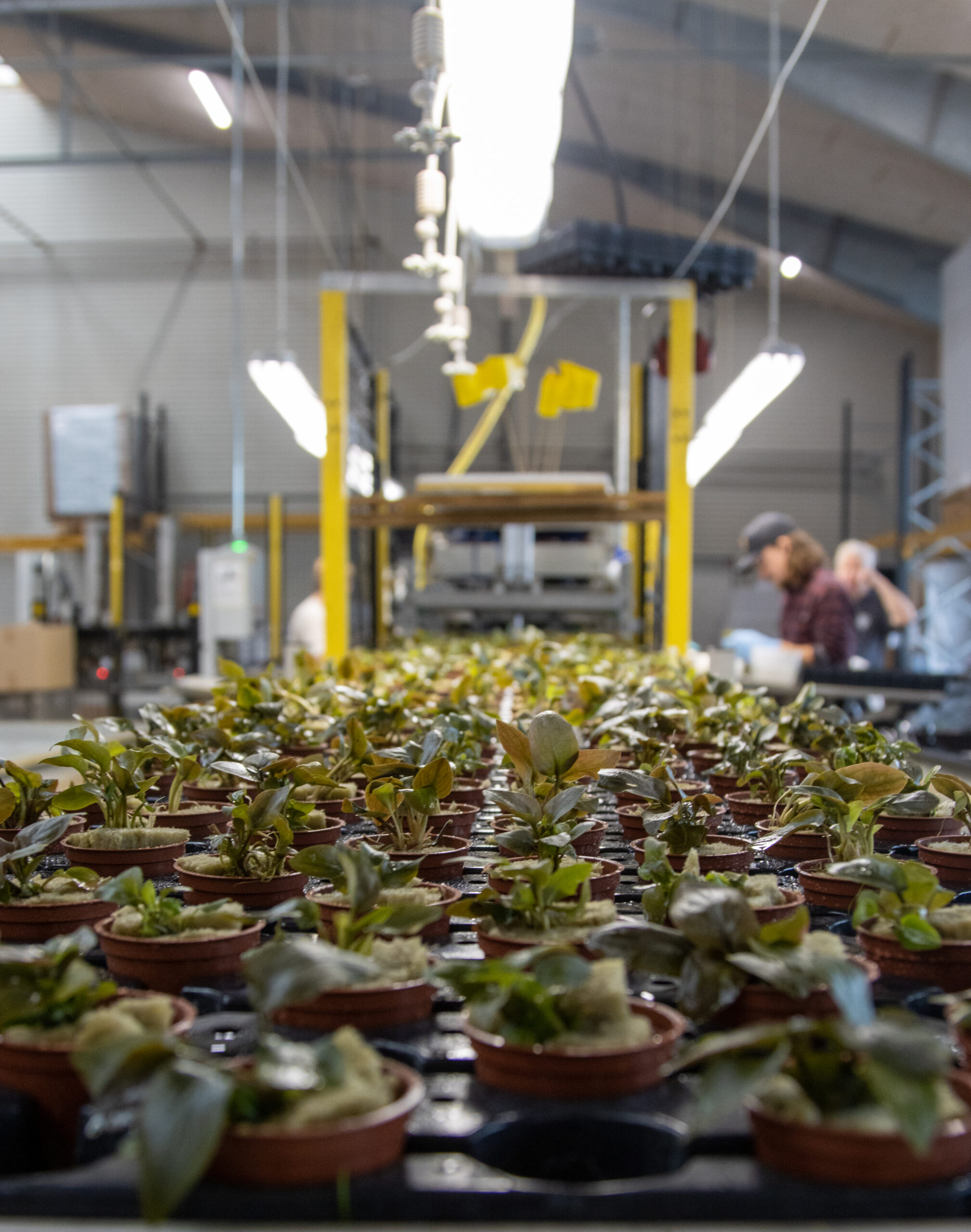
Tropica Aquarium Plants has switched its primary packaging from plastic to cardboard and received the Scanstar Award for its new cardboard tray. The award is given to solutions that show the way forward for future packaging with a focus on the environment, design and user-friendliness. This is an important step in their efforts to reduce plastic consumption and make their products more environmentally friendly.
Another important product improvement is the introduction of their clip solution, which is an alternative to the traditional pot with rock wool. The clip holds the plant by its roots, reducing material consumption, minimising waste, optimising transport and providing the consumer with a simpler and more sustainable experience. In the long term, their ambition is for this solution to replace the pot as standard – for the benefit of the environment, customers and the company.
Education and workplace development
Tropica Aquarium Plants sees education as a cornerstone of both its social responsibility and its own future. They are therefore proud to have been named Apprenticeship of the Year 2024 by GLS-A and 3F’s Green Group. The award was given in recognition of their dedication to training skilled workers in several areas:
- They currently have two greenhouse gardener apprentices in training, one of whom nominated them for the award.
- For the third time, they have a laboratory assistant apprentice in training in their laboratory department.
- They also offer training courses and temporary positions to other professional groups, including two young German employees in development and production.
New building with sustainable framework in Germany
In collaboration with its sister company Dennerle Plants, Tropica Aquarium Plants is constructing a new central hall in Germany. The hall will both improve the physical working environment for employees and reduce energy consumption.
Vahle
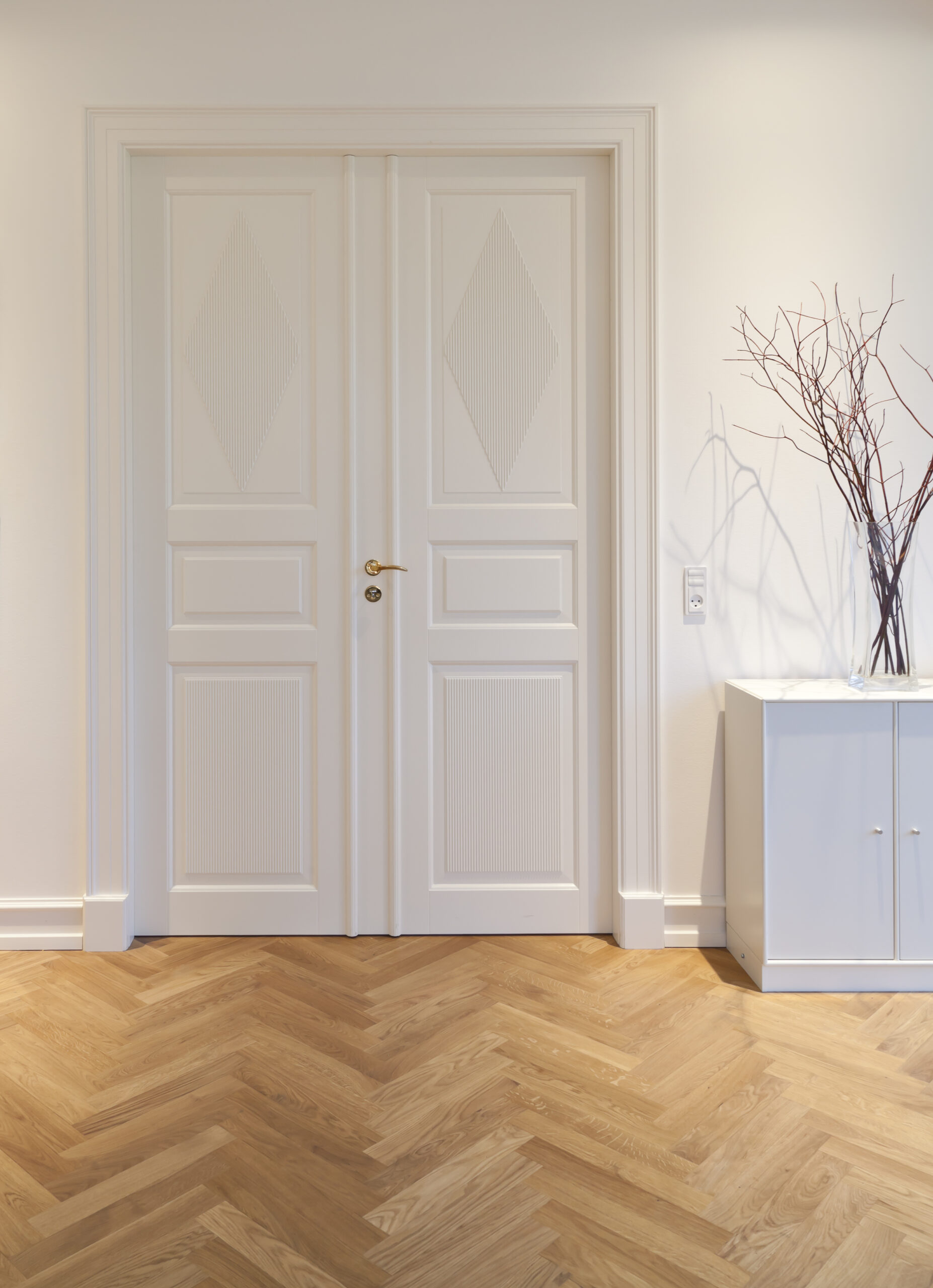
At Vahle, 2024/25 has been characterised by strategic investments in sustainability, employee well-being and professional development – all with a view to future-proofing production and strengthening their social responsibility.
One of the biggest initiatives of the year has been the installation of a new, comprehensive extraction system, which is an important part of their strategy to modernise and expand production. The system improves the working environment and significantly reduces dust exposure. At the same time, the establishment of new and larger production facilities has given employees more space and air. In line with their values of employee involvement, the employees themselves have helped design their new workstations to suit their individual needs and work routines.
In terms of the environment, they have achieved an important milestone: they can now offer a complete FSC®-certified door solution, after successfully obtaining FSC®-certified frame wood this year. This strengthens their sustainable profile and enables their customers to choose solutions that actively support responsible forestry.
Vahle has also been awarded the indoor climate label for the surface treatment of all painted doors – an important step towards healthier products for both employees and end users.
Vahle is also an active player in the renovation of older housing stock, where their innovative door solutions make it possible to achieve modern functionality and aesthetics with a significantly lower carbon footprint compared to new construction. In this way, they are contributing to the green transition in construction.
Finally, this year marks an important step in their work on gender equality and vocational training: their first female apprentices – a cabinetmaker and a machine carpenter – have completed their training, and they have also hired their first female journeyman, who also trained in-house. They see this as a natural and important part of their responsibility to shape a more diverse and inclusive industry.
Grønning Hårdt Træ
Grønning Hårdt Træ – new company with a strong sustainability profile
Grønning Hårdt Træ is included in this year’s CSR report for the first time, after the company became part of JPS Marselis in autumn 2024. With a strong professional profile and a clear focus on responsible forestry, Grønning Hårdt Træ actively contributes to the group’s overall sustainability efforts.
The company offers wood exclusively from certified forestry operations, including both FSC®-certified (FSC®-C177142) and PEFC-certified wood. This is an important effort, especially since much hardwood is imported from areas outside Scandinavia, where documentation of sustainable forestry can be opaquer. The certifications ensure that the wood comes from forests where environmental, social and economic responsibility are taken into account – and this matches the demand from a customer base that is increasingly demanding documented, sustainable solutions.
Grønning Hårdt Træ also works with a stock strategy that reduces the climate footprint from transport and storage. By keeping smaller stocks of wood and working with just-in-time deliveries, logistics are optimised, reducing unnecessary energy consumption and CO₂ emissions.
In the energy area, the company is in the process of replacing its existing heating system. The new system will be connected to district heating and will be significantly more energy efficient, which is expected to result in a significant reduction in resource consumption for heating both the administration building and production facilities.
With these measures, Grønning Hårdt Træ A/S is already demonstrating, as a new group entity, that sustainability and responsibility are integrated into both its operations and strategy.
Dansk Administrationscenter
Dansk Administrationscenter continues to work with strength-based management. Through ongoing training, employees become aware of their personal strengths and learn to use them actively in their daily collaboration. The focus shifts from weaknesses to potential, giving individuals the opportunity to develop where they already stand strong – for the benefit of both the community and the task at hand.
In 2024, the Danish Administration Centre conducted a workplace assessment (APV), which showed high satisfaction with both the psychological and physical working environment. No serious problems were identified, and all suggestions for improvement have since been implemented. Even before the APV, the company had established a weekly massage programme, where a professional masseur offers treatment during working hours. The company pays for the treatment, while employees use their flexitime scheme. The programme has contributed to strengthening overall satisfaction.
Based on the APV, further measures have been implemented. All employees have participated in a course with a crisis psychologist, who has provided tools for dealing with both major and minor crises and supporting colleagues in connection with stressful experiences in their work with tenants and customers. In addition, an occupational therapist specialising in office workplaces visited the company and adapted all workstations individually. Employees have also received guidance on ergonomic routines and exercises that prevent injuries related to screen work and sedentary work.
Dansk Administrationscenter continues to support Danske Hospitalsklovne, Julemærke-marchen and Sport “n” Charity with financial donations. The Sølund Music Festival is supported by employees donating a day’s work to help set up tents for the festival.
In the office, the focus is on minimising printer output through digitisation and automation of work processes. Food waste is reduced by employees actively cancelling their lunch on days when they are not physically present. In addition, we have invested in another electric car, so that the company’s rental consultants now drive exclusively electric vehicles.
In 2024, four employees will have completed specialised training in sustainability with a focus on the property industry. Two employees have completed EA training, while two more are currently enrolled. In addition, three employees are enrolled in relevant business academy programmes, and several are regularly participating in courses and subjects that strengthen both their own and the company’s overall competencies.

JPS Agro
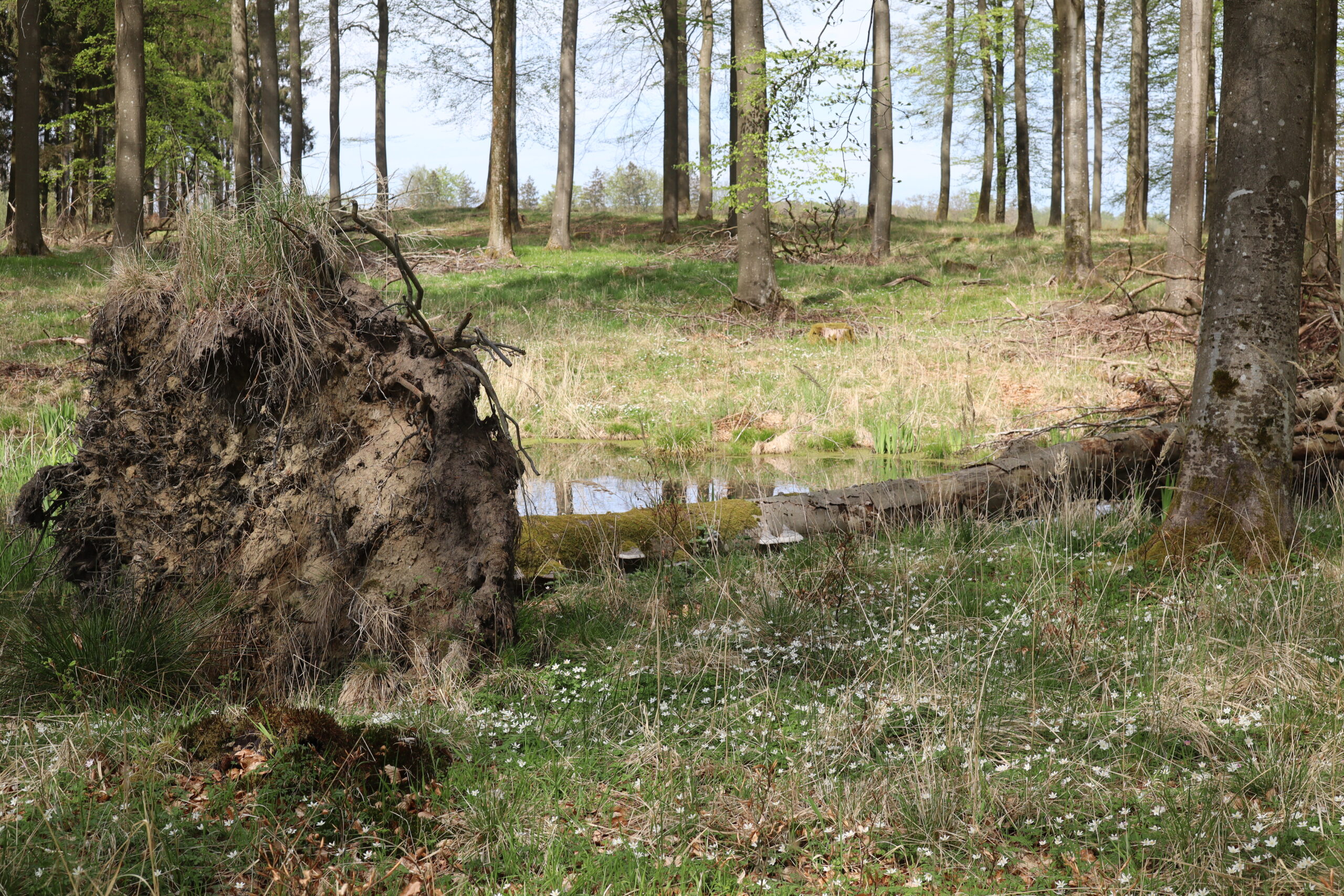
In 2024, JPS AGRO converted 17,000 m² into untouched forest as part of a major biodiversity initiative. The area is part of the company’s total forest area of 220,000 m², located close to Yding Skovhøj – Denmark’s highest point. In the untouched forest, no trees may be felled or new ones planted, giving nature the freedom to develop on its own terms.
Untouched forest is an important habitat that supports the UN’s global goals, especially in relation to biodiversity, climate and sustainable ecosystems. It creates habitats for a wealth of species and a rich, natural food chain that is otherwise under pressure in the modern landscape.

Support for charitable projects
In 2024/25, the Group supported the following projects, which are described in more detail at jpsmarselis.dk:
DanChurchSocial’s general work in Aarhus, which is home to the city’s homeless and others in need.
Three-year climate agreement with DanChurchAid. The agreement focuses both on making a difference to the climate and on helping communities facing adversity due to climate change. The climate agreement will see more than 2,000 trees planted in Uganda, which, thanks to the absorption of CO2 this will achieve, is going to have a positive effect on the climate as well as a positive direct impact on the local community.
“SheWORKS”, which is a project under Made in Hope, which collaborates with trafficked women and their children in Manilla, Philippines. The project includes support and assistance for training that enables women to support themselves and have a better life.
In the areas of human rights, anti-corruption and business ethics, we have conducted overall assessments of the primary risks in 2024/25 as a basis for further work. The work with the assessments is, like the development of the policies for social responsibility in general, carried out across the organization with representation from the group’s companies. This ensures a great awareness of the risk picture throughout the group. No other areas or actions have been found that require special handling.