Pursuant to section 99a of the Danish Financial Statements Act 2025-26
The statutory statement on corporate social responsibility (Corporate Responsibility or ‘CR’) comprises a description of the business model of JPS Marselis ApS in relation to corporate social responsibility, policies for corporate social responsibility and risk assessment, as well as a description of actions and results.
JPS Marselis ApS has chosen to publish the statement pursuant to section 99a on the company’s website.
The following statement covers the reporting of JPS Marselis ApS for 2025/26 and forms part of the management’s review as presented in the annual report.
Description of the business model of JPS Marselis
JPS Marselis is structured around ownership of subsidiaries focusing on Danish properties (JPS Germa A/S) and the companies Tropica Aquarium Plants A/S (activities in Denmark, Germany and Canada), Hornbaek A/S (activities in Denmark and Latvia), Vahle A/S (activities in Denmark), Grønning Hård Træ A/S (activities in Denmark), JPS Hotel Service A/S (activities in Denmark) and Dansk Administrationscenter A/S (activities in Denmark). Several of these companies are organised as focused sub-groups with their own subsidiaries. The individual companies operate with a high degree of operational independence: they have their own organisation and management, which are responsible for running the business. The companies’ underlying subsidiaries carry out activities that are identical or closely related to the company’s core activity.
The majority of the Group’s revenue derives from in-house production of timber products and aquatic plants. The remainder of revenue derives mainly from trading activities and the letting of real property.
The Group’s purchases of raw materials are limited to timber, primarily from Nordic and Baltic forests, which is bought in large volumes from recognised suppliers. The Group’s purchases of components cover a large number of products sourced from suppliers all over the world. The common characteristic of these products is that they are manufactured by suppliers with high quality standards.
The Group’s sales are largely based on sales to professionals, who sell the goods on to both private and professional customers. Direct revenue/sales to private and public-sector customers is very limited. The Group’s properties are predominantly let to private individuals (residential).
The above characteristics of the Group’s overall business model mean that certain CR-related matters are particularly central to our business. This applies in particular to matters relating to our employees, our use of resources such as energy and raw materials, and good business ethics.
CR – policy and risk assessment
JPS Marselis has adopted policies for corporate social responsibility in the following areas:
- Human rights
- Social and employee matters
- Anti-corruption measures and business ethics
- Environment and climate
The policies have been implemented across the Group.
The Group’s CR policy provides the framework for a shared approach among our employees with regard to our values and our objective of acting sustainably and responsibly. The policy sets out a number of guidelines as well as our expectations of one another, and summarises how we should conduct ourselves as employees and as an employer respectively. The policy is based on the UN Global Compact.
JPS Marselis has also carried out an overall risk assessment of these areas. The most significant risks are described below in connection with the policy for each area.
Human rights
JPS Marselis has activities in a wide range of countries around the world. Regardless of the country in which we operate, we strive to respect human rights and to treat our employees with dignity and respect. We support and respect the protection of internationally proclaimed human rights as set out in the UN Universal Declaration of Human Rights and in the ILO’s conventions and recommendations.
JPS Marselis has carried out an overall risk assessment in relation to human rights. The Group operates in various countries. However, no particular risks relating to human rights are considered to be associated with these countries.
The management of all activities is familiar with our policies and positions on human rights – regardless of geographical location. This is considered a fully adequate measure to counter the risk of human rights violations. No human rights violations were identified during the year. With the measures described, no particular risk is expected going forward.

Social and employee matters
At JPS Marselis, we believe that results are created through people. We aim to be a responsible employer that ensures proper terms of employment, healthy and safe working conditions and a motivating working environment for our employees. We are a diverse workplace that contributes to the communities in which we are present by creating jobs and by employing unskilled workers and people on the margins of the labour market.
JPS Marselis has carried out an overall risk assessment in relation to social and employee matters. As JPS Marselis regards its employees as the Group’s most important resource, CR risks relating to social and employee matters are considered an area of particularly material importance.
The Group’s activities require dedicated and professionally skilled employees, and considerable demands are placed on employees’ competences. In general, the workforce consists predominantly of well-educated staff or employees who, after instruction and training, have acquired the competences needed to comply with the companies’ quality and safety standards. This helps to ensure that a high standard of occupational health and safety can be maintained.
With regard to social and employee matters, particular risks are explicitly considered to exist in activities carried out outside what was formerly Western Europe (Latvia), as management culture and motivating working environments are not as widespread and do not have the same historical integrity as we know them in Denmark. We therefore pay particular attention to these areas in the ongoing management and controlling of these subsidiaries. This particular focus is considered to reduce the risks described. Improvements are made continuously to minimise risks in this area. There were no specific cases in this respect in 2025/26.
In relation to the policies described for this area, no unacceptable actions/decisions were identified in this area during the financial year. The measures initiated are considered sufficient to address the risk of violations in this area going forward. Management monitors this area on an ongoing basis and will take the necessary measures to avoid unacceptable incidents should the activities initiated prove insufficient.
The overview below shows recorded occupational injuries in subsidiaries with employees:
| JPS Marselis subsidiaries with employees | |||
| 2025/26 | 2024/25 |
2023/24 |
|
| JPS Clemens A/S | 0 | 0 | 0 |
| Tropica Aquarium Plants A/S | 1 | 0 | 0 |
| Dennerle Plants GmbH | 0 | 2 | 0 |
| Tropica North America Ltd | 0 | 0 | 0 |
| Carmen Damer GmbH | 0 | 1 | 4 |
| JPS Aquatic (UK) Ltd | 0 | 0 | NR |
| Hornbaek A/S | 1 | 4 | 4 |
| Hornbaek Baltic, Letland | 3 | 4 | 3 |
| Vahle A/S | 1 | 3 | 1 |
| Grønning Hårdt Træ A/S | 0 | 0 | NR |
| JPS Germa A/S | 0 | 0 | 0 |
| Dansk Administrationscenter A/S | 0 | 1 | 0 |
Anti-corruption measures and business ethics
Over the years, JPS Marselis has built a reputation as a company that maintains a high degree of integrity and ethical conduct. We oppose all forms of corruption, including bribery
JPS Marselis has carried out an overall risk assessment in relation to anti-corruption and business ethics. The vision of JPS Marselis is to be among the best at creating value in a decent and trustworthy manner by committing ourselves and our companies to taking responsibility and acting sustainably, regardless of the country in which we operate. The vision is deeply rooted in the way JPS Marselis does business, which has helped to build the Group’s good reputation. This area is therefore not considered to constitute a material CR risk, but it is nevertheless given considerable attention to ensure that the high standard is maintained.
With regard to anti-corruption and business ethics, particular risks are explicitly considered to exist in activities carried out outside what was formerly Western Europe (Latvia). The reason is the business environment, which is or has been characterised by bribery and corruption as historically important ingredients in achieving business objectives. We therefore pay particular attention to these areas in the ongoing management and controlling of these subsidiaries. This particular focus is considered to reduce the risks described.
In relation to the policies described for this area, no unacceptable actions/decisions were identified in this area during the financial year.
The Group has introduced a whistleblower scheme in line with common practice for good corporate governance. Under the whistleblower scheme, employees, customers, suppliers, business partners and other stakeholders associated with the JPS Marselis Group may, in good faith, submit anonymous or non-anonymous reports of serious matters that may affect the company as a whole or that may be of critical importance to the life or health of individuals. The whistleblower scheme is available on jpsmarselis.dk in four language versions: Danish, English, German and Latvian. No reports were submitted via the scheme in 2025/26.
The activities initiated in this area are expected to be sufficient to counter the risks in this area. Management will follow up on an ongoing basis and make corrections if necessary.
Environment and climate
The companies in JPS Marselis work with raw materials that are predominantly produced with a positive effect on the environment. This applies both to the primary raw material (timber from Northern European forests) and to purchased plants. We recognise the impact on the environment of transporting raw materials and of the subsequent production/processing. Our CR policy on the environment and climate is that we take responsibility for our environmental and climate impact by actively protecting the environment, including by reducing our consumption.
JPS Marselis has carried out an overall risk assessment in relation to the environment and climate. As a result of an ongoing reduction in the consumption of resources, stemming from an active commitment to environmental responsibility and sound business practice, this area is not considered to constitute a material CR risk for the Group. When purchasing raw materials, certification is normally a key requirement (e.g. FSC®), which ensures that the raw materials meet a number of CR requirements.
In March 2023, JPS Marselis joined the UN Global Compact. This means that the Group is officially committed to complying with ten internationally agreed principles for responsible business conduct and to helping the global community achieve the UN Sustainable Development Goals. In addition to the Group, Tropica, Hornbaek and Vahle have also joined the UN Global Compact, as it makes good sense to include the individual manufacturing companies, which already focus on sustainable production. Being part of the UN Global Compact provides a unique opportunity to learn from other companies’ experience and gain inspiration on how we can improve even further, and where and when we should focus our efforts.
In relation to the policies described for this area, no unacceptable actions/decisions were identified in this area during the financial year. Based on the activities initiated, no risks are considered to exist in relation to this area.
Description of actions and results
CR activities at JPS Marselis take place primarily in the companies, and ongoing efforts are prioritised according to the areas with the highest CR risk. These often coincide with the focus areas that also have a business perspective, i.e. social and employee matters as well as the environment and climate.
2025/26 is the ninth year in which a report on corporate social responsibility (section 99a) has been prepared.
A brief status for each business area is provided below.
Building on the course programme in lean and sustainable production completed by all employees at Hornbaek, Tropica and Vahle as well as the foreign subsidiaries, all employees have played an active role in 2025/26 in the companies’ day-to-day work to take lean and sustainability to new levels. In addition, employees have refreshed their knowledge of lean and sustainability through short courses, and the team leaders responsible for the companies’ visual management boards have been trained in running visual management board meetings.
Our employees regularly attend courses to prepare them for new areas of responsibility, upskilling and personal development.
Rather than investing in new computers for the companies, the Group continues to purchase refurbished computers for the job functions where this makes sense. The computers are refurbished to such a high standard that employees can neither see nor feel that they are used.
The Group’s CR policy provides the framework for a shared approach among our employees with regard to our values and our objective of acting sustainably and responsibly. The policy sets out a number of guidelines as well as our expectations of one another, and summarises how we should conduct ourselves as employees and as an employer respectively. The policy is based on the UN Global Compact, and to strengthen work within the four selected areas, JPS Marselis and its subsidiaries Tropica, Hornbaek and Vahle have joined the UN Global Compact.

Hornbaek Denmark and Hornbaek Baltic
The following specific activities were carried out at Hornbaek in 2025/26:
During the year, investment was made in a sorting system that allows purchased raw timber to be sorted with mechanical assistance. Previously, sorting was done manually. The new sorting system will relieve employees of a great deal of heavy manual lifting, which has a significant effect in preventing physical wear and tear.
In the production area, the acoustics have been improved considerably during the year by installing sound-absorbing material on the ceiling. This has a significant effect on the working environment in production.
Production of timber mouldings has been automated by fitting an automatic feeder to one of the machines. The effect on the working environment is a reduction in manual lifting.
By investing in Document Capture, a new document management system, the company has saved a great deal of paper and reduced the number of work processes, thereby saving time.
Slutteligt har Hornbaek støttet Aarhus Teater i årets løb
The following specific activities were carried out at Hornbaek Baltic in 2025/26:
Improving the working environment
Over the past year, Hornbaek Baltic has implemented a number of targeted measures to improve the working environment and ensure a more ergonomic and healthy working life for employees.
A key initiative has been the installation of a humidification system in production, which provides better control of the moisture content of the air. This results in a markedly better indoor climate, which contributes to greater comfort for employees in production.
Similarly, robots have been introduced to clean the production areas, reducing the dust content of the air, which has a significant effect on the indoor climate.
Finally, Hornbaek Baltic has introduced ergonomic sit-stand stools at the stationary production workstations. These make it possible to alternate between sitting and standing, which improves working postures and reduces the risk of strain injuries over time.
These improvements are part of the company’s ongoing efforts to create a healthy and sustainable working environment where well-being and safety go hand in hand with efficiency and quality.
Improvements to the natural environment
As part of Hornbaek Baltic’s sustainability strategy, the company has implemented several measures over the past year focused on reducing its environmental impact and using resources more efficiently.
The company has adjusted its quality requirements in production so that it can now make better use of raw materials, including lower-quality materials. This has led to a significant reduction in waste and contributes to more responsible and resource-efficient production.
These initiatives are important steps in the company’s efforts to run a more environmentally responsible business and strengthen its contribution to a sustainable future.

Tropica and Dennerle Plants
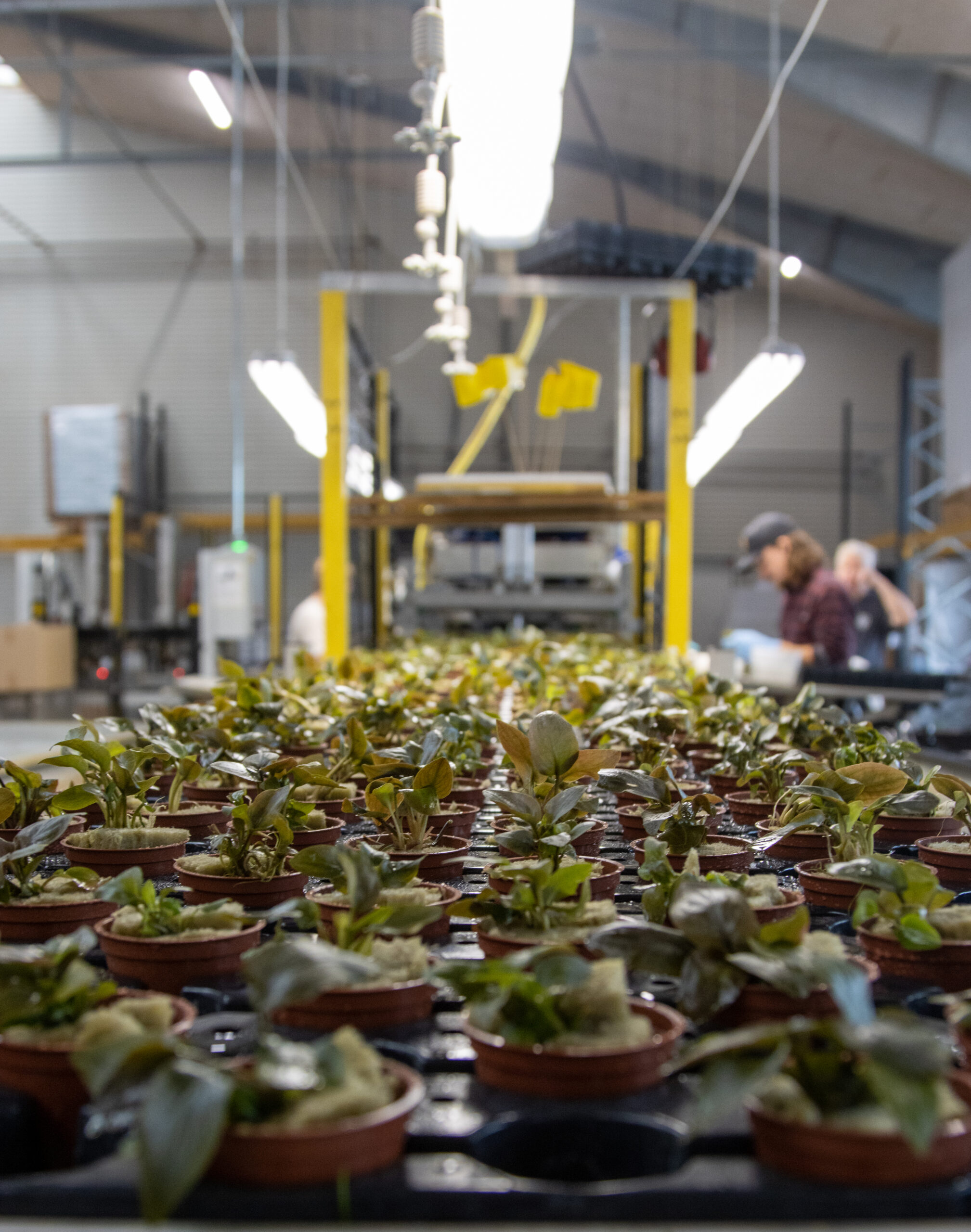
Over the past year, Tropica Aquarium Plants has taken significant steps towards more sustainable and responsible business practices – with regard to the environment, its employees and the community around it.
Tropica Aquarium Plants has carried out a full energy mapping of the company with a view to identifying potential savings in its total resource consumption. The energy audit and climate audit cover all energy consumption for buildings, production and transport.
Tropica Aquarium Plants har udarbejdet energisynet og klimasynet iht. Gældende retningslinjer med mest mulig egen indsats, samt med nødvendig ekstern ekspertise i form af en godkendt energi- og klimasynsudførende virksomhed.
The energy audit comprises an examination and analysis of Tropica Aquarium Plants’ energy consumption with the aim of identifying opportunities to improve energy efficiency and reduce energy consumption.
The climate audit comprises an examination and analysis of Tropica Aquarium Plants’ climate footprint with the aim of identifying opportunities to reduce emissions, for example by switching from fossil to renewable energy sources. Process emissions are not included in the climate audit.
During the year, work has continued on implementing a number of environmental measures initiated in previous years. These include sustainable packaging and product innovation:
Tropica Aquarium Plants has switched its primary packaging from plastic to cardboard and received the Scanstar award for its new cardboard tray. The award is given to solutions that point the way for the packaging of the future, with a focus on the environment, design and user-friendliness. This is an important step in the company’s work to reduce its use of plastic and make its products more environmentally friendly.
Another important product improvement is the introduction of its clip solution, an alternative to the traditional pot with rock wool. The clip holds the plant by its roots, which reduces material consumption, minimises waste, optimises transport and gives the consumer a simpler and more sustainable experience. In the longer term, the company’s ambition is for this solution to replace the pot as standard – to the benefit of the environment, customers and the company.
New sustainable premises in Germany
At Dennerle Plants, Germany, a new central building was constructed during the year. The building will improve the physical working environment for employees and reduce energy consumption. It brings together administration, production and warehousing in a highly insulated, multifunctional facility that is partly powered by solar energy. At the same time, it replaces older greenhouse areas with high energy consumption, thereby contributing to more climate-friendly operations.
Vahle
At Vahle, the 2025/26 financial year has been characterised by strategic investments in sustainability, employee well-being and professional development – all with a view to future-proofing production and strengthening the company’s corporate social responsibility.
The year’s largest initiative has been the launch of the implementation of a configurator to be used for preparing quotations and as a basis for production. Once fully implemented, the solution will create more robust business processes with 100% consistency from quotation to production. This will minimise the risk of errors and thereby reduce resource consumption.
Implementeringen af nye brandgodkendelser baseret på EU-krav er ligeledes i gang. De skærpede krav vil bidrage til øget personsikkerhed i de løsninger, vi leverer.
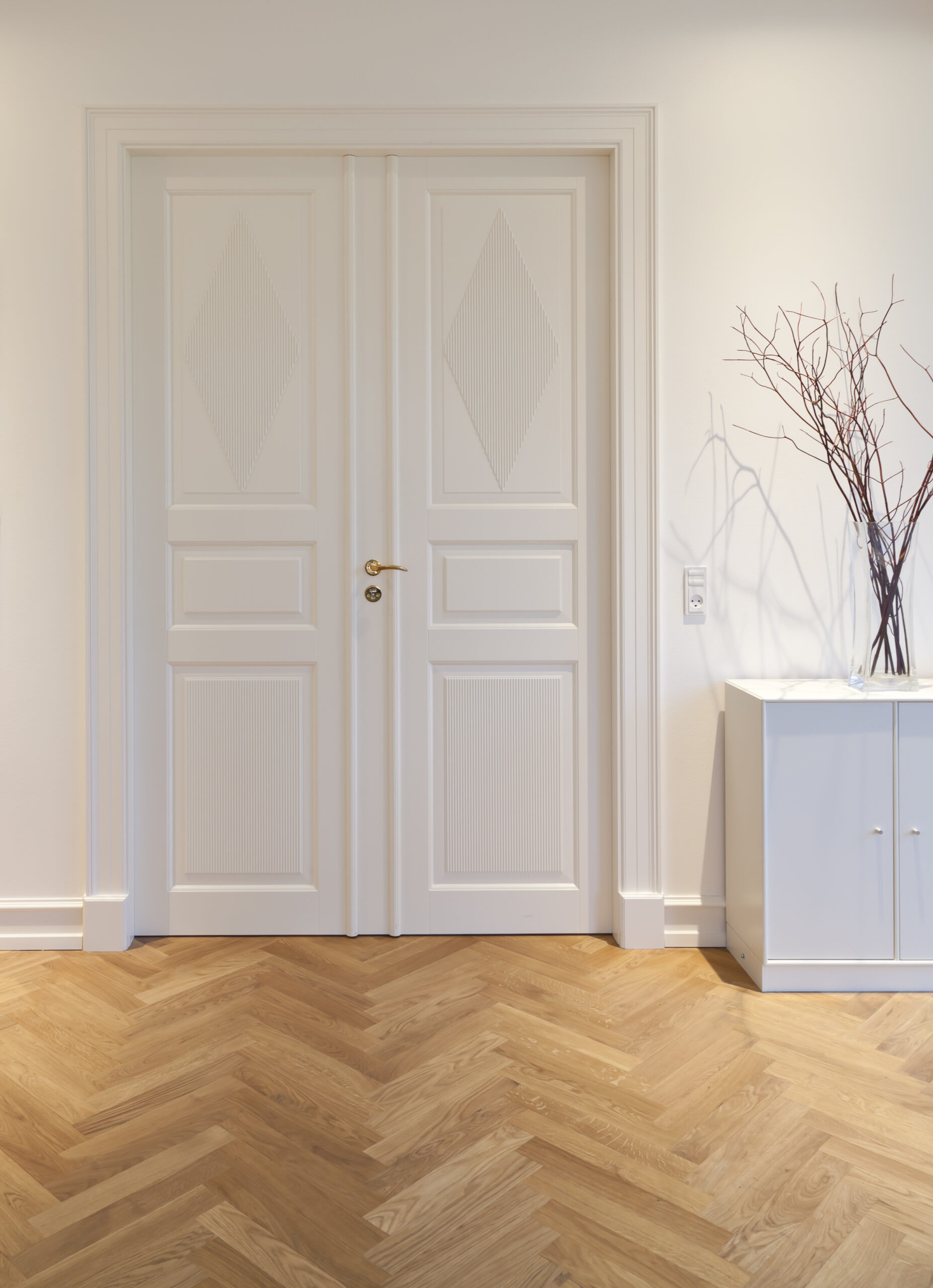
Vahle is an active player in the renovation and transformation of the older building stock. We are seeing a growing number of projects where our doors are used in buildings being converted to new uses. In both types of project, we contribute innovative door solutions that make it possible to achieve modern functionality and aesthetics with a significantly lower CO₂ footprint compared with new construction. Our solutions thereby contribute to the green transition in the construction sector.
Hos Vahle har vi fem snedkerlærlinge. Vi ser det som en vigtig opgave at uddanne fremtidens faglærte arbejdskraft og dermed bidrage til udviklingen af branchen.

Grønning Hårdt Træ
Grønning Hårdt Træ has a strong professional profile and a clear focus on responsible forestry. Grønning Hårdt Træ thereby contributes actively to the Group’s overall sustainability efforts.
Virksomheden tilbyder udelukkende træ fra certificerede skovdrifter, herunder både FSC®-certificeret (FSC®-C177142) og PEFC-certificeret træ. Det er en vigtig indsats, særligt fordi meget hårdt træ importeres fra områder uden for Skandinavien, hvor dokumentationen for bæredygtig skovdrift kan være mere uigennemsigtig. Certificeringerne sikrer, at træet stammer fra skove, hvor der tages hensyn til både miljø, sociale forhold og økonomisk ansvarlighed – og det matcher efterspørgslen fra en kundekreds, der i stigende grad stiller krav om dokumenterede, bæredygtige løsninger.
Grønning Hårdt Træ also works with a stock strategy that reduces the climate footprint from transport and storage. By holding smaller timber stocks and working with just-in-time deliveries, logistics are optimised, which reduces unnecessary energy use and CO₂ emissions.
In the area of energy, the company has replaced its existing heating system. The new system is connected to district heating and is markedly more energy-efficient, resulting in a significant reduction in the resources used to heat both the administration building and the production facilities.
Grønning Hårdt Træ übernimmt zudem soziale Verantwortung als selbstverständlichen Teil seiner Nachhaltigkeitsstrategie. Das Unternehmen möchte zu einem inklusiven Arbeitsmarkt beitragen und Raum für Menschen mit unterschiedlichen Voraussetzungen schaffen. Deshalb beschäftigt Grønning Hårdt Træ Mitarbeitende in Flexjobs (eine dänische Beschäftigungsform für Menschen mit eingeschränkter Arbeitsfähigkeit) und hat außerdem durch die Einstellung eines Auszubildenden zum Maschinentischler (dän. maskinsnedker) Verantwortung für die Ausbildung der Fachkräfte von morgen übernommen. Die Maßnahmen unterstützen sowohl die soziale Verantwortung des Unternehmens als auch die langfristige Sicherung fachlicher Kompetenzen in der Branche.
With these measures, Grønning Hårdt Træ A/S demonstrates that sustainability and responsibility are integrated into both its operations and its strategy
Dansk Administrationscenter
Dansk Administrationscenter continues to work with strengths-based leadership. Through ongoing training, employees become aware of their personal strengths and learn to use them actively in their day-to-day collaboration. The focus shifts from weaknesses to potential, giving each individual the opportunity to develop where they are already strong – to the benefit of both the team and the work.
In 2025, Dansk Administrationscenter carried out a workplace risk assessment (APV), which showed high satisfaction with both the psychosocial and the physical working environment. No serious problems were identified, and all suggestions for improvement have since been implemented. Even before the APV, the company had introduced a weekly massage scheme in which a professional masseur offers treatment during working hours. The company pays for the treatment, while employees use their flexitime. The scheme has helped to strengthen overall satisfaction.
Dansk Administrationscenter continues to support Danske Hospitalsklovne, Julemærke-marchen and Sport ’n’ Charity with financial donations. Sølund Musik-Festival is supported by employees donating a working day to help put up tents for the festival.


Support for charitable projects
In 2025/26, the Group supported the projects listed below, which are described in more detail on jpsmarselis.dk:
DanChurchSocial’s general work in Aarhus, which is home to the city’s homeless and others in need.
Three-year climate agreement with DanChurchAid. The agreement focuses both on making a difference to the climate and on helping communities facing adversity due to climate change. The climate agreement will see more than 2,000 trees planted in Uganda, which, thanks to the absorption of CO2 this will achieve, is going to have a positive effect on the climate as well as a positive direct impact on the local community.
“SheWORKS”, which is a project under Made in Hope, which collaborates with trafficked women and their children in Manilla, Philippines. The project includes support and assistance for training that enables women to support themselves and have a better life.
In the areas of human rights, as well as anti-corruption and business ethics, we carried out overall assessments of the primary risks in 2025/26 as a basis for further work. As with the development of the corporate social responsibility policies in general, the work on the assessments has been carried out across the organisation with representation from the Group’s companies. This ensures a high level of awareness of the risk profile throughout the Group. No other areas or actions requiring special handling have been identified.
In 2026/27, we will maintain the Group’s CR efforts within the areas described above.